24-Hour Dispatch Line: 732-610-9287
24-Hour Dispatch Line: 732-610-9287
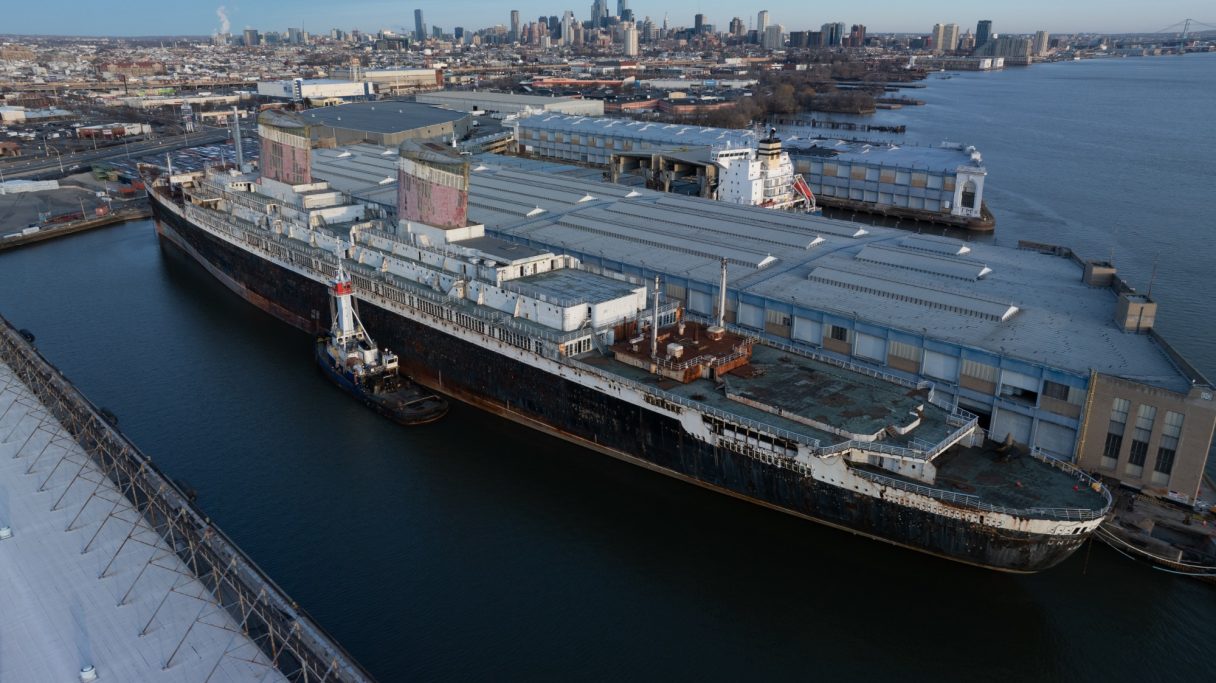
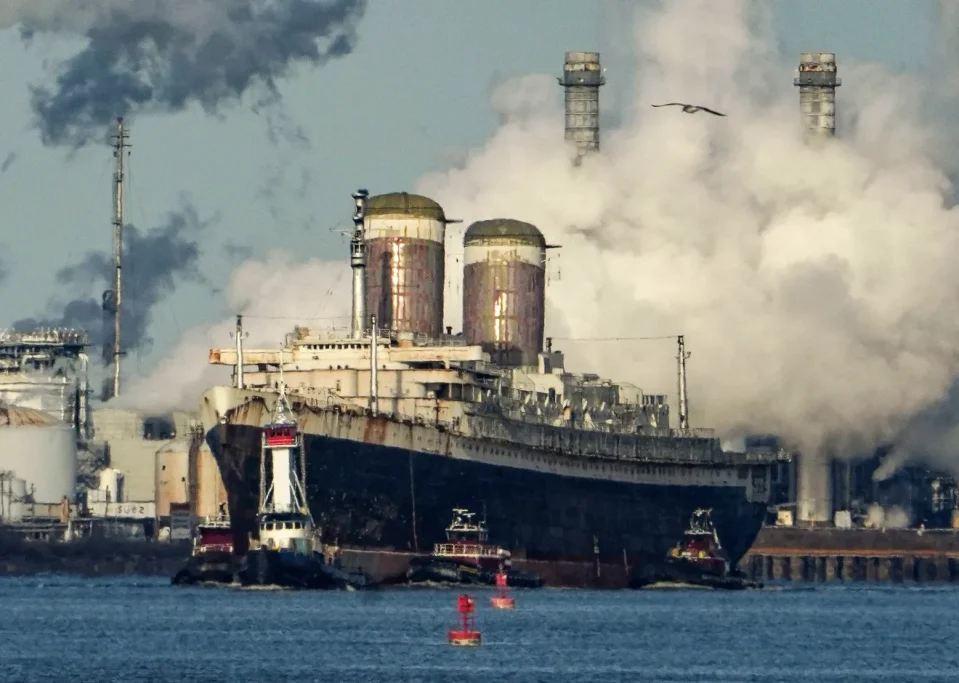
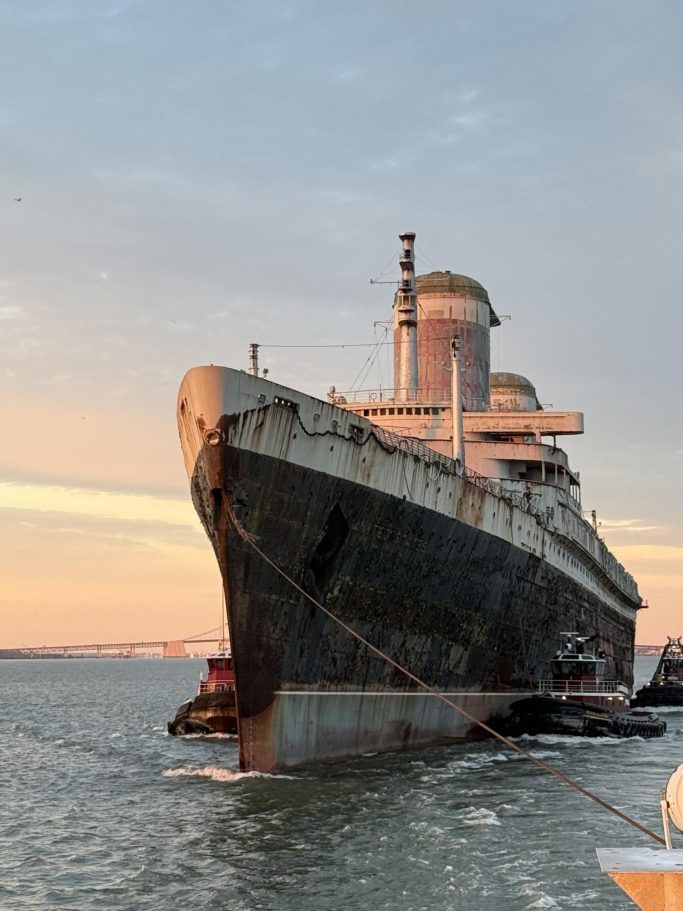
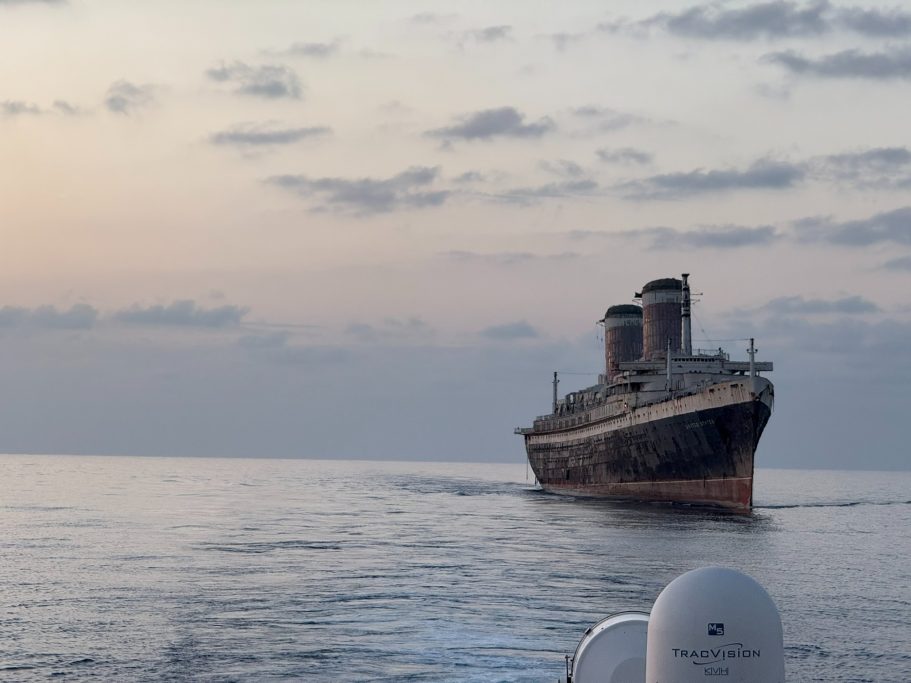
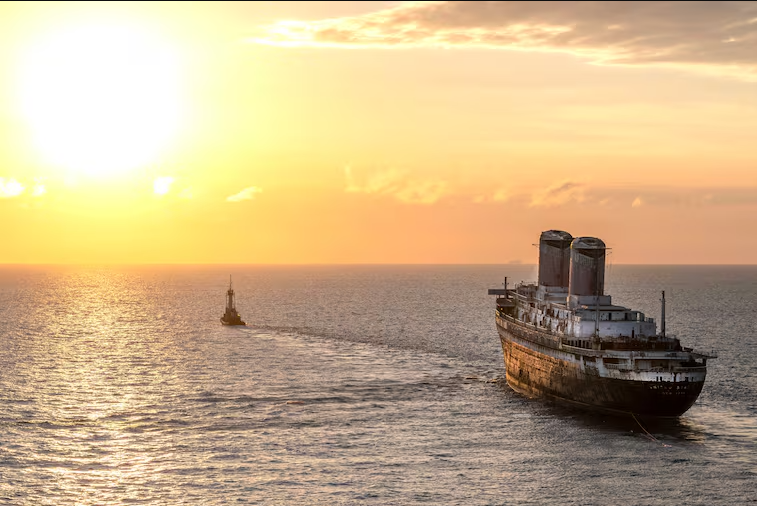
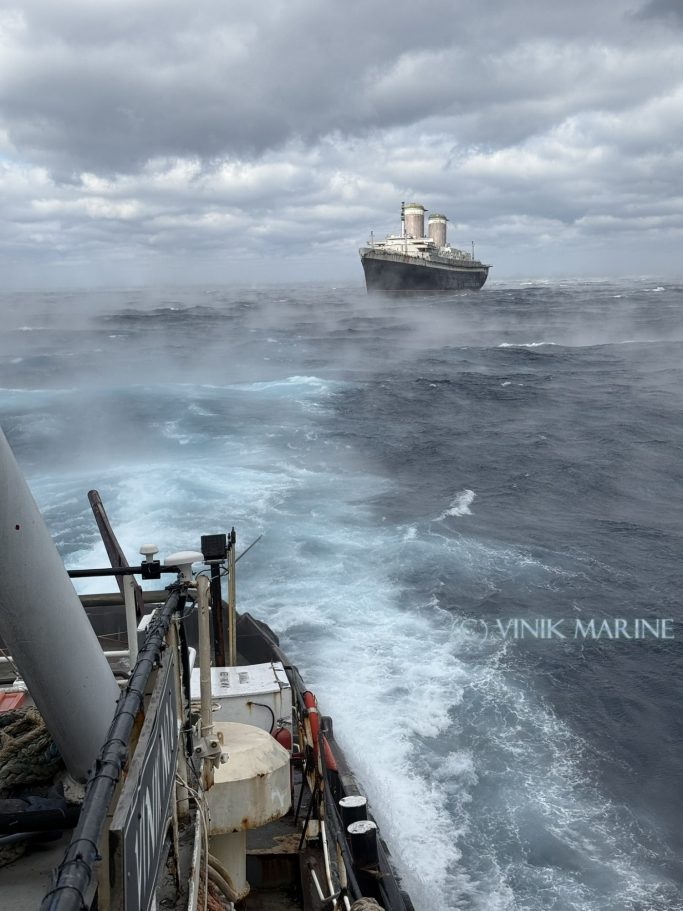
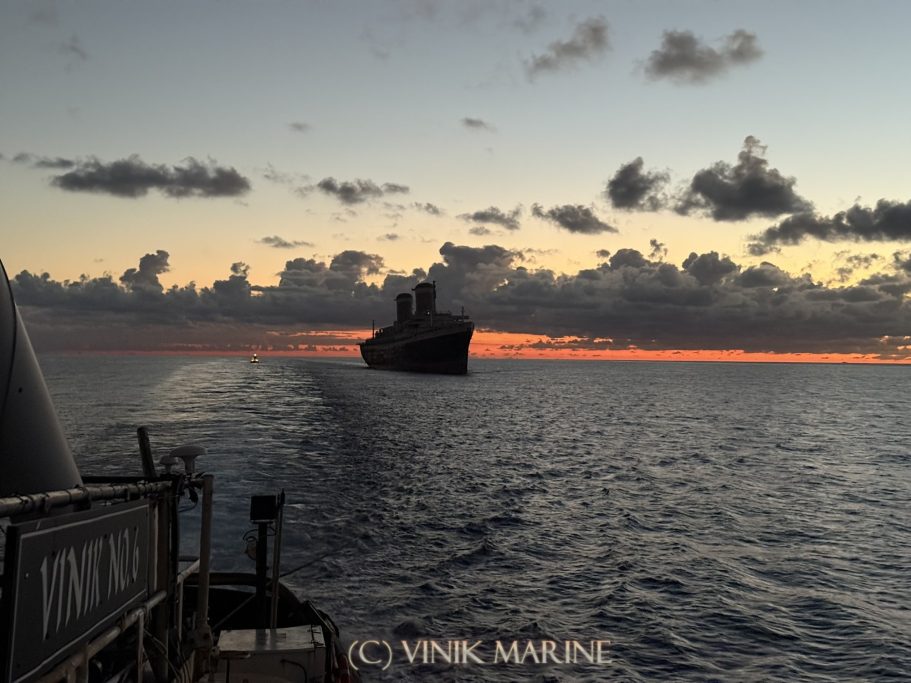
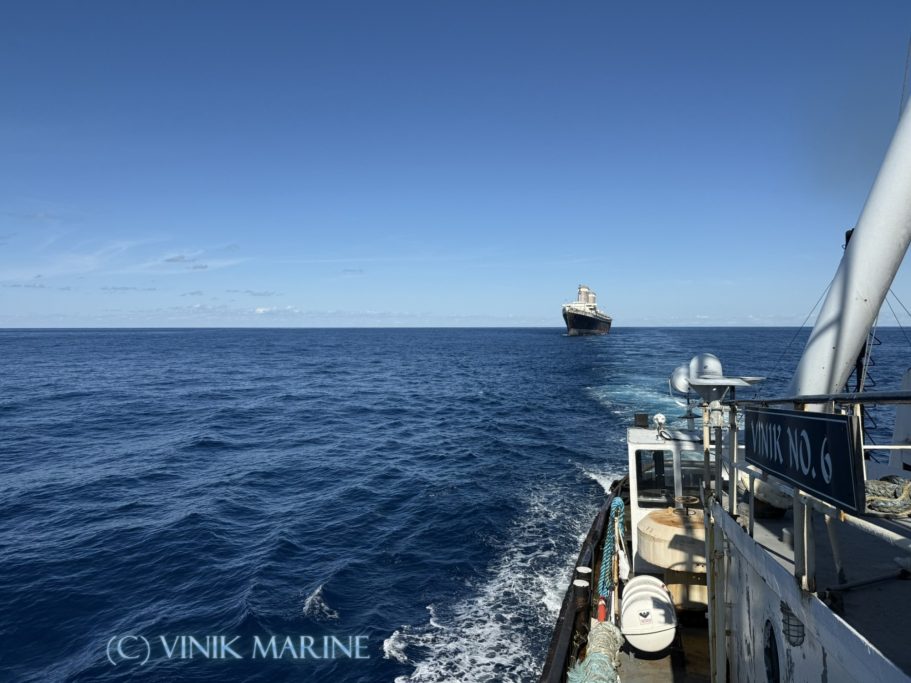
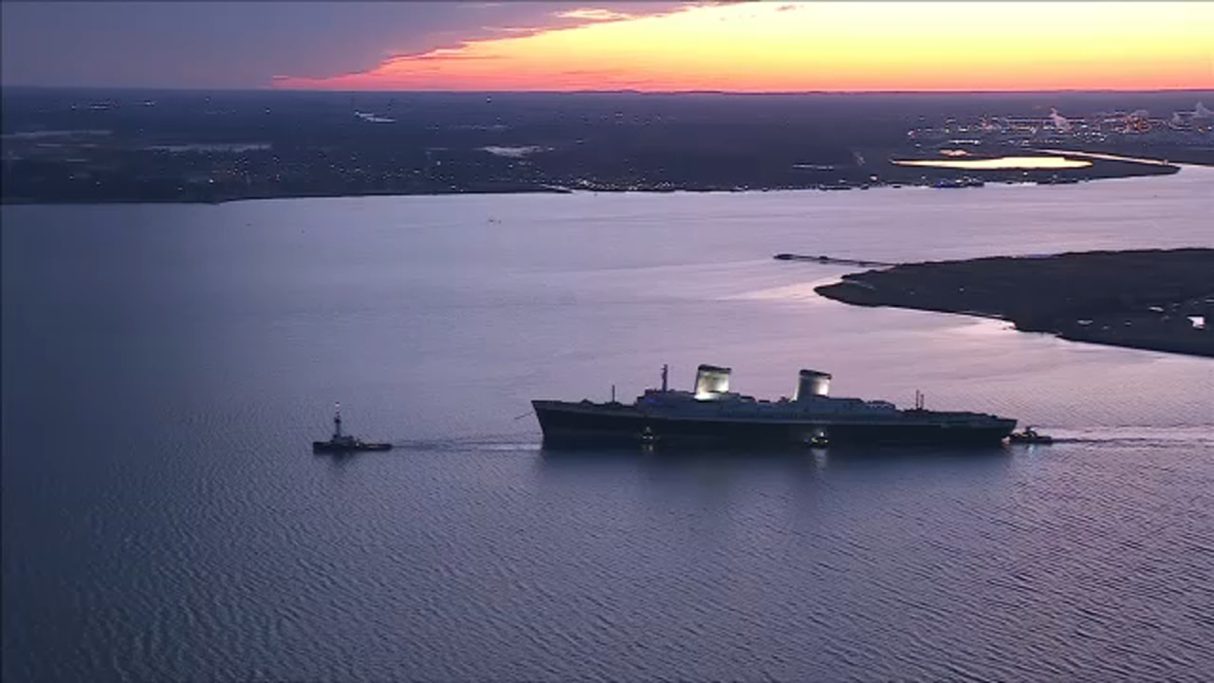
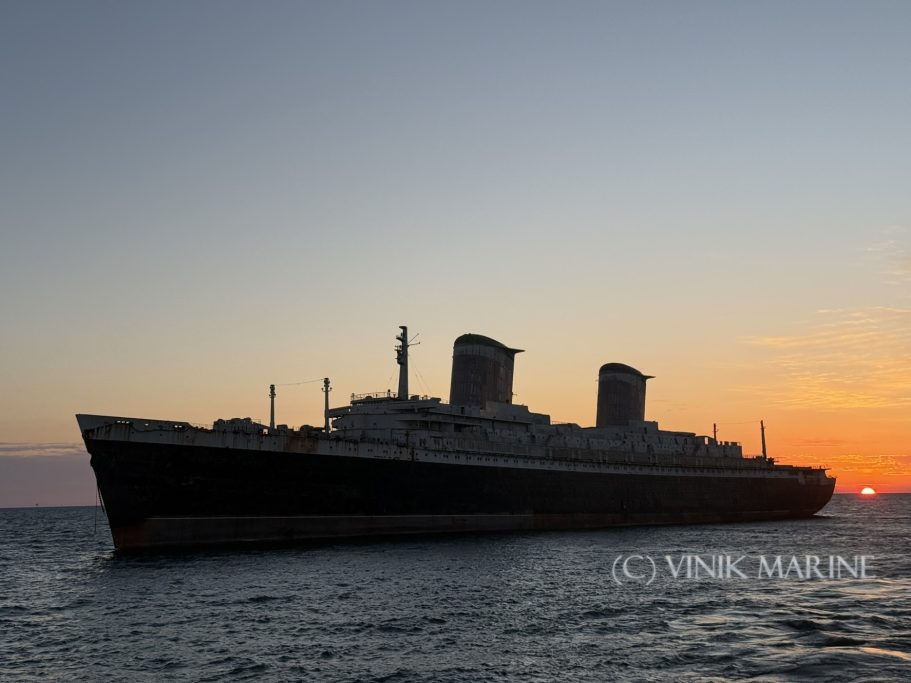
In February of 2025 Vinik Marine's Vinik No. 6 towed the SS United States on her final voyage from Pier 80, Philadelphia, Pennsylviania to Mobile, Alabama where she is being prepped to become the world's largest artifical reef.
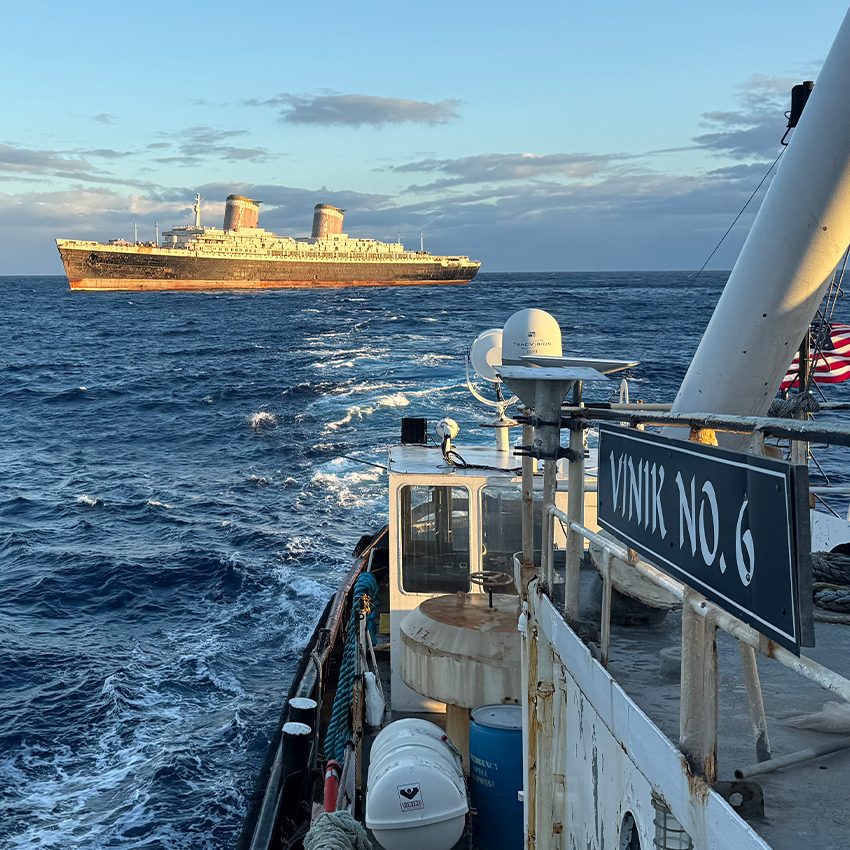

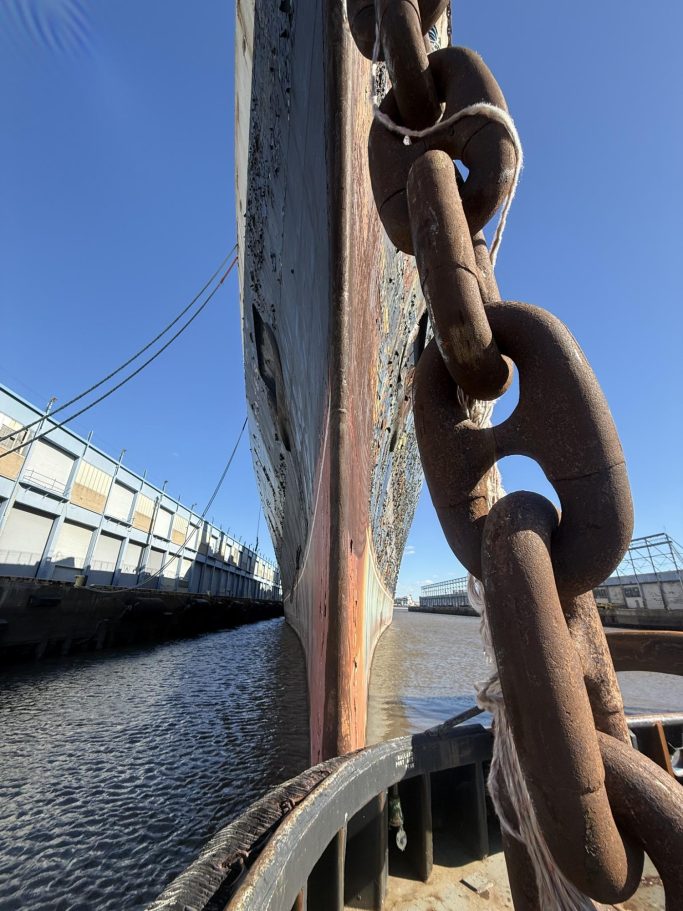
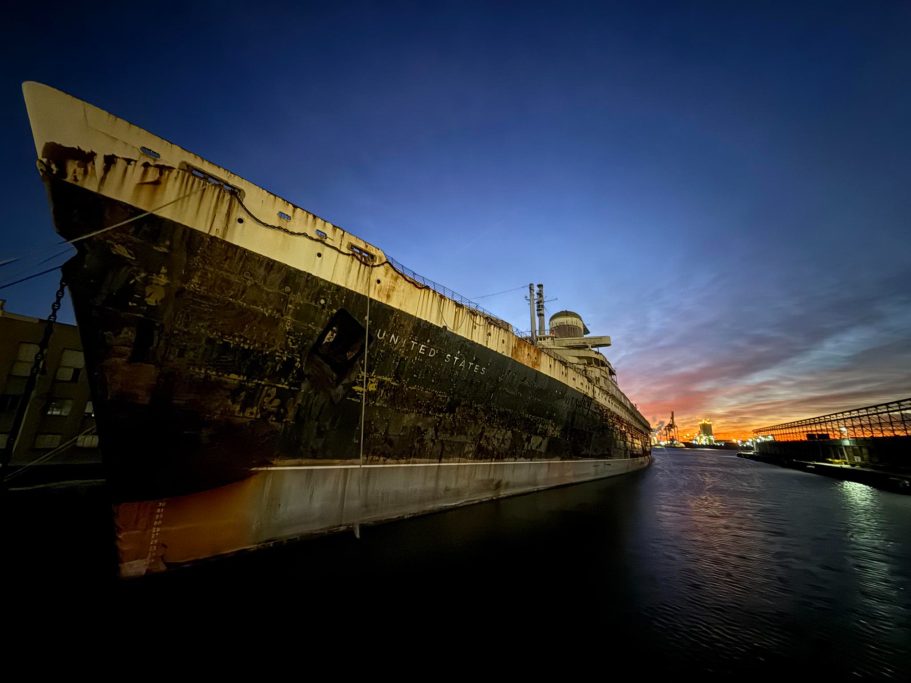
The ocean liner SS United States was built in 1950 entirely in the United States and earned her place in history as the fastest oceanliner to cross the Atlantic with an average speed of 35.59 knots. She has held the Blue Riband speed award uncontested since 1952. Known as 'America's Flagship,' this oceanliner hosted four U.S. presidents and celebrities such as Marilyn Monroe and Walt Disney. Although primarily intended to transport civilians across the Atlantic, she was built with the capability to be converted to a military transportation vessel, capable of bringing 14,000 troops to a theatre of war, should it become necessary.
The SS United States was towed from Philadelphia, PA to Mobile, AL by the Vinik No. 6 Tug. The largest tug in the Vinik Marine fleet, the 6 was built in 1970 by Southern Shipbuilding of Slidell, LA. Vinik Marine aquired the tug in 2018 from Kirby Corporation.
The 6 holds the title of the fastest tugboat in NY Habor from the 27th Annual Great North River Tugboat Race & Competition.
"I have this tremendous honor to help lay my superhero to rest. I'm going to do it and give it the pomp and circumstance it deserves... It was incredible."
Standby in Philadelphia, PA, Pier 80
The Vinik No. 6 arrived in Piladelphia and stoodby, getting acquainted with the United States, and waiting for high winds to die down and sea conditions to improve before getting underway. The crew who delivered her safely to Mobile, AL included:
Pier 80, Philadelphia to Cape May, NJ: Embarkation
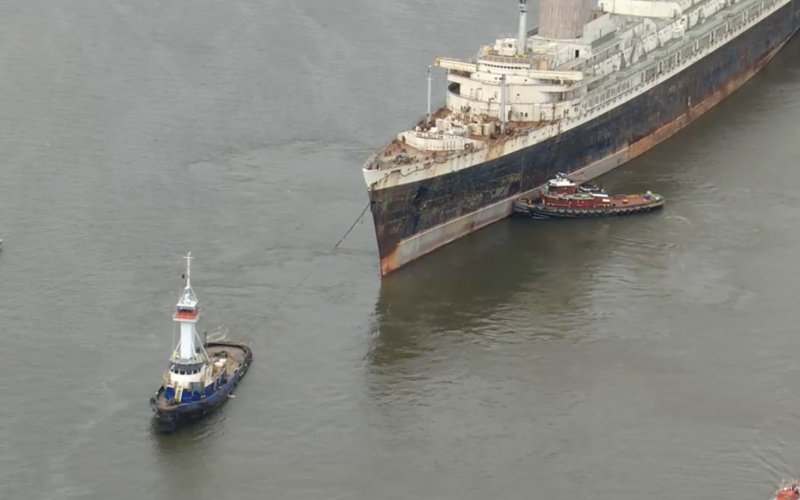
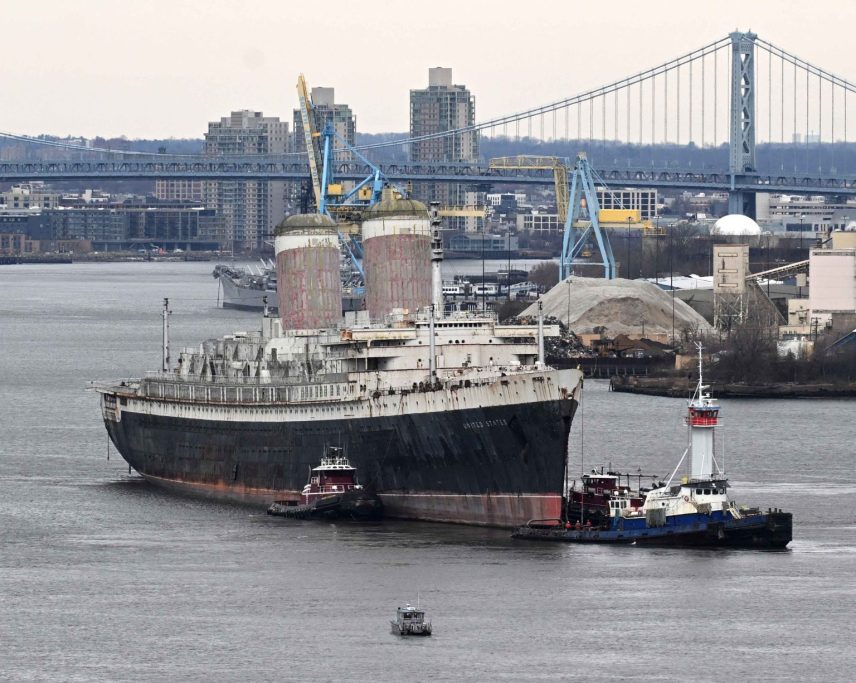
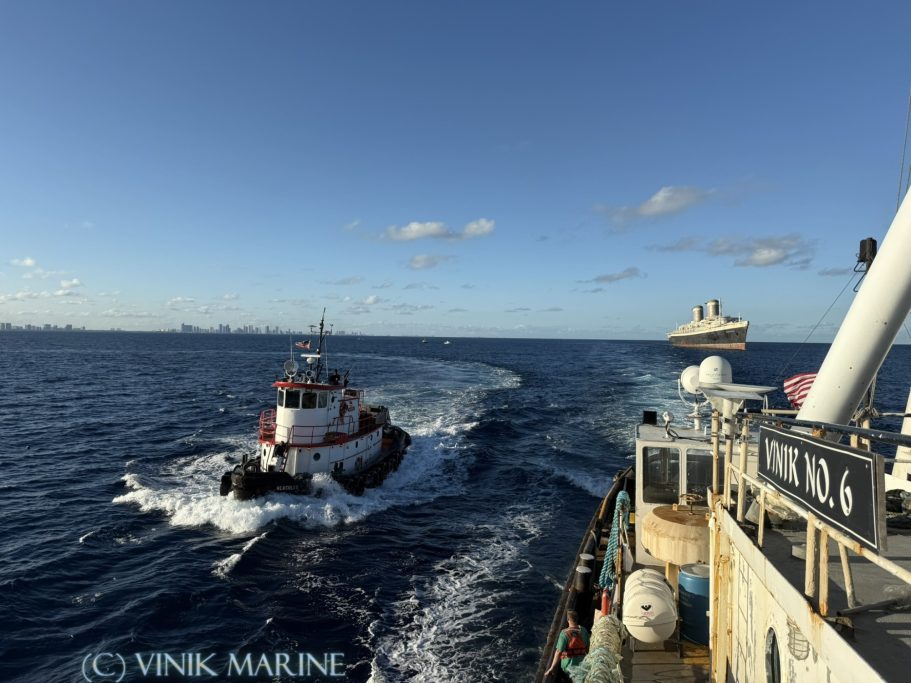
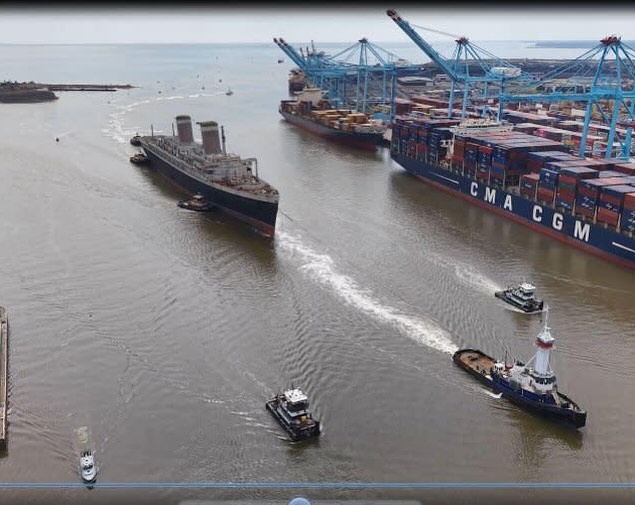
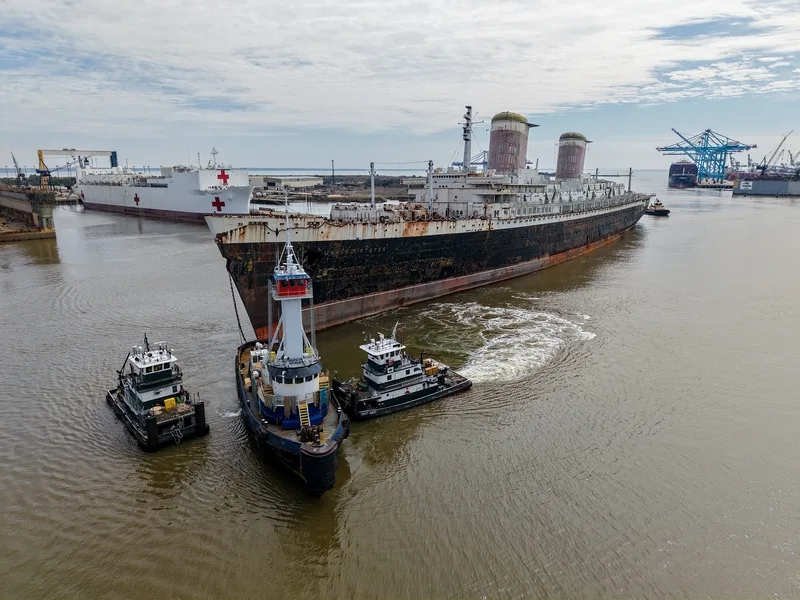
With the help of four Moran and McAllister Tugs, at 11:40 AM the United States left Pier 80 to start her journey down the Delaware River. Once out of the berth, the Vinik No. 6 made up to United States and began the tow. The timing of each manuever down the Delaware was carefully planned and excuted by Captain Mike Vinik to arrive at the bridges according to the tide schedule. The United States is too tall to pass under the bridges at high tide. Multiple assist tugs flanked the massive ocean liner, keeping her straight as she traveled southbound down the Delaware, under the steady power of the Vinik No. 6. Crowds lined the banks paying their final respects to the 'Great Lady' as she was pulled by.
Out to Sea and Back Again: Technology Hiccups
Vinik Marine had to check in with their customer every six hours along the way to report progress, fuel consumption, weather conditions, ETA, and the general status of the United States. At 0600, finally offshore, Capt. Mike attempted to contact the client. He quickly discovered that their Starlink internet did not work offshore without a specific "Oceans" data plan—which was something he could not purchase without an active internet connection.
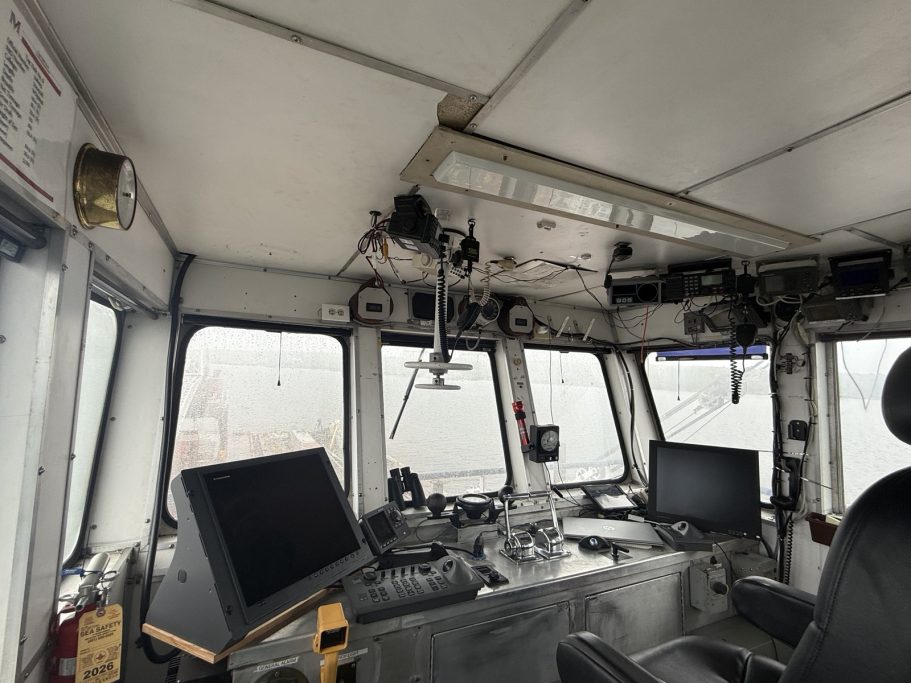
With 2000 feet of towline out, the Vinik No. 6 had to turn back toward land to connect to the internet and upgrade their plan. They pulled the United States in to 800 feet and made way for Ocean City, MD, the closest point to shore. They headed 61 feet up to the upper wheelhouse in search of reception. The moment they connected and upgraded their plan, they turned around and headed back out to Sea, onward to Mobile.
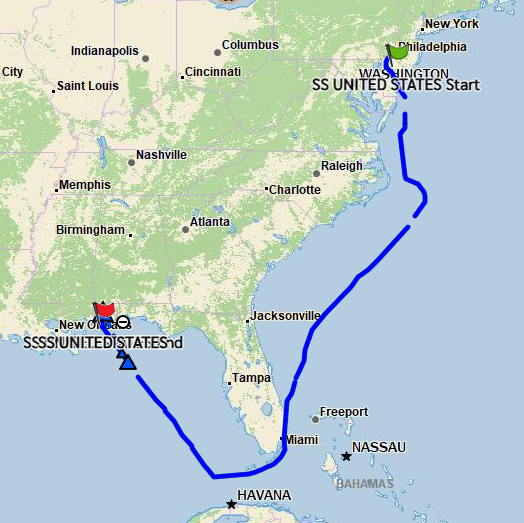
This tow was a highly visible event. The crew knew a significant number of people were tracking their journey via Garmin InReach. What would the outside world think if they saw the ship suddenly turn around? Onlookers would surely assume something was terribly wrong with the beloved ocean liner. Ironically, the volume of trackers was so massive that it crashed the Garmin servers, meaning no one actually saw the detour. On the Garmin map below, you can see two interruptions in the tracking route. These gaps mark the timespans the number of virtual onlookers overwhelmed the server's capacity.
Heave To at Hatteras!
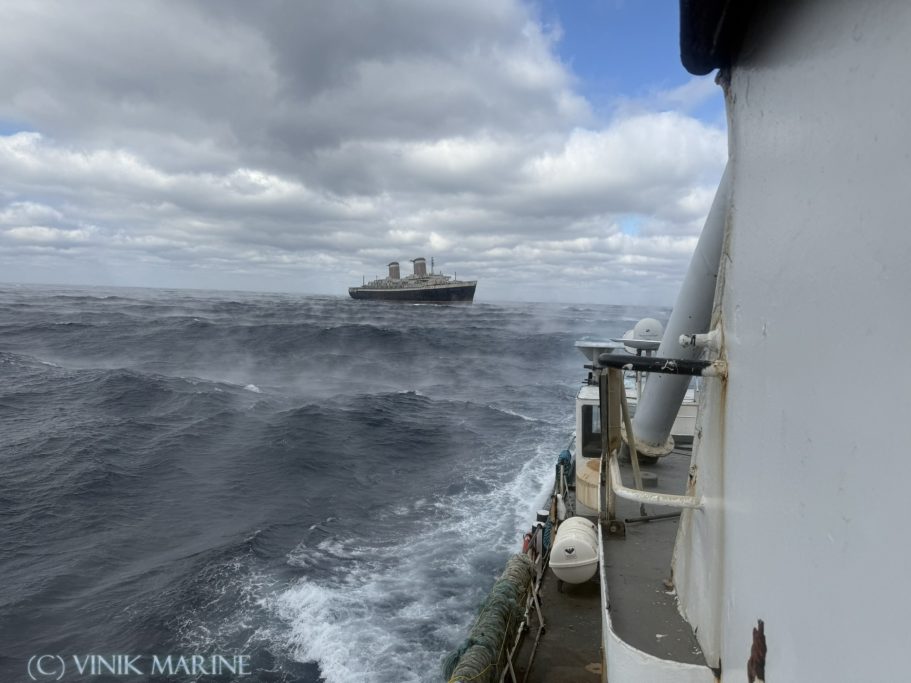
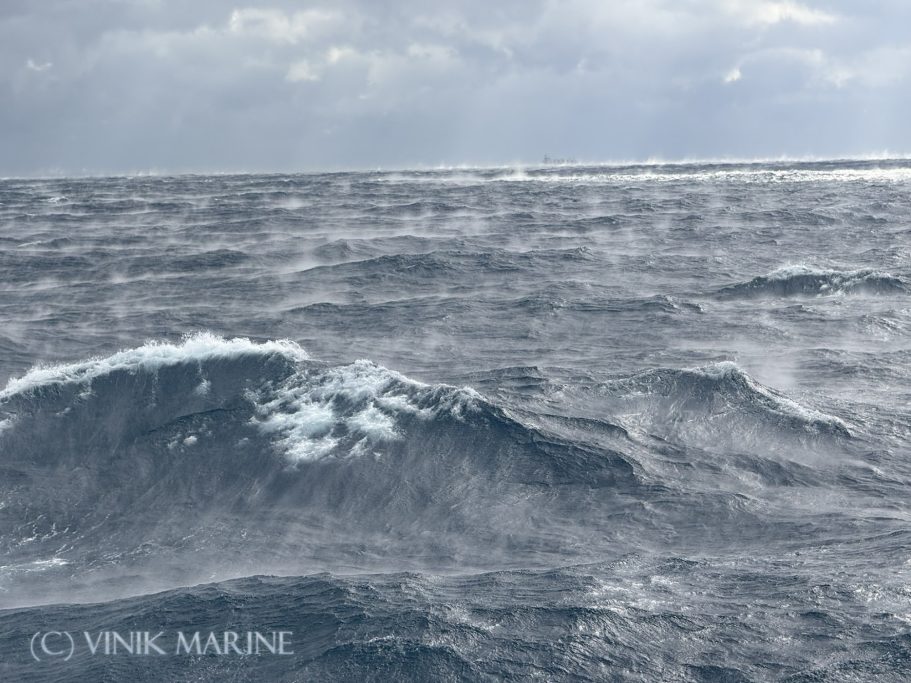
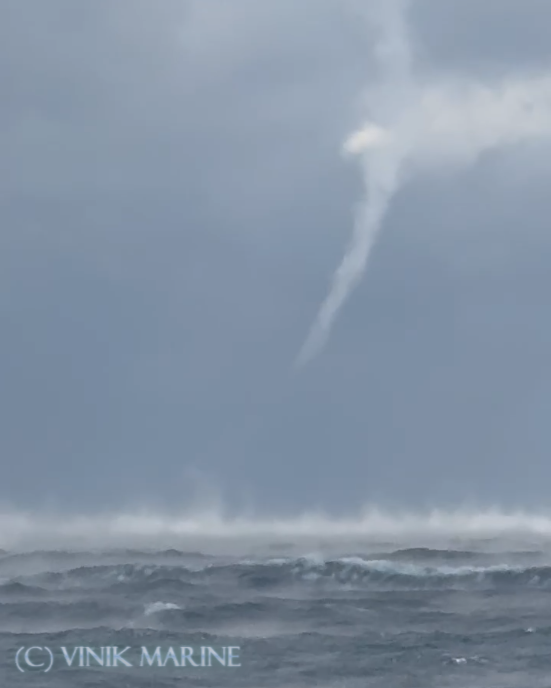
When our intrepid crew left Philly, it was 30°F. Off Cape Hatteras, North Carolina, the Gulf Stream surged north with 80°F seawater, colliding violently with a north wind carrying that 30°F air. Wave heights peaked at 5 meters, and waterspouts erupted all around them. The fierce wind caught the United States broadside; while the crew had previously been averaging 5 to 7 knots southwest, the gale was now shoving them 3.5 knots due east. Understanding you can't fight the weather, they heaved to. They kept the engines turning just enough to maintain tension on the towline and waited for the storm to pass.
Hatteras to Florida, Grey Hair and Sea Friends
When the weather cleared, the Vinik No. 6 got her bearings and hitched a ride on the Gulf Stream’s countercurrent—a current that flows opposite to the broader, prevailing stream. This strategy helped the crew make up some of the time lost while heaving to the day before. However, the weather routing service tracking the countercurrent suddenly warned of looming 9-meter seas. It was a heart-stopping moment that Capt. Mike joked took two years off his life, causing a brief panic until the crew realized the service had accidentally switched from metric to standard units; the forecast was actually calling for manageable 9-foot seas. From there, they averaged 7 to 7.5 knots until they reached Key West.
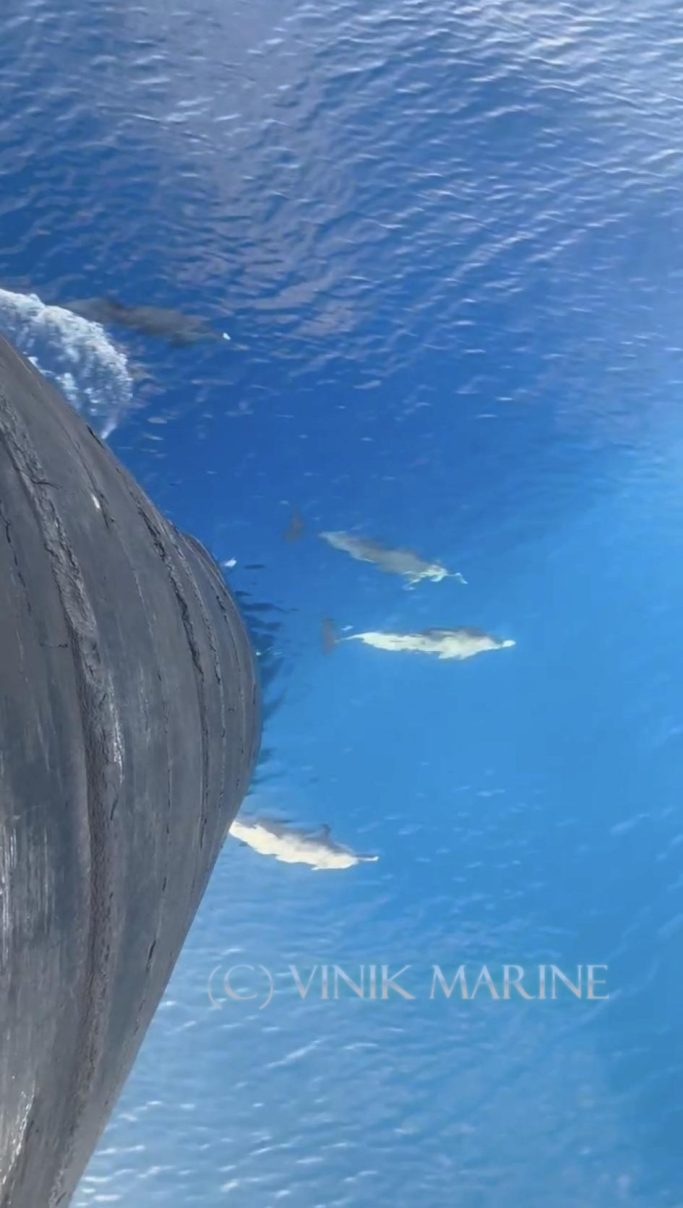
As soon as they hit Florida waters they were joined continously by pods of dolphins accompanying them to the Gulf. They had to drop a crew member off in Florida who had to fly home and swung within 3 miles of shore where he could be collected by a pilot boat. This is where they saw their first sharks, off the coast of Fort Lauderdale.
Full Ahead to Mobile, Alabama!
The final voyage of the United States was bookended by severe weather. With a storm bringing 60+ mph winds forecasted to hit the Gulf on March 4, it was imperative that the United States safely dock in Mobile by March 3. Because the Gulf lacks sheltered places to weather such a storm, the crew of the Vinik No. 6 pushed their average speed up to 9.5 knots to outrun the system. They were joined by an escort tug at Sector Key West, but the Vinik No. 6 was moving so quickly that the lighter escort tug could barely keep pace.
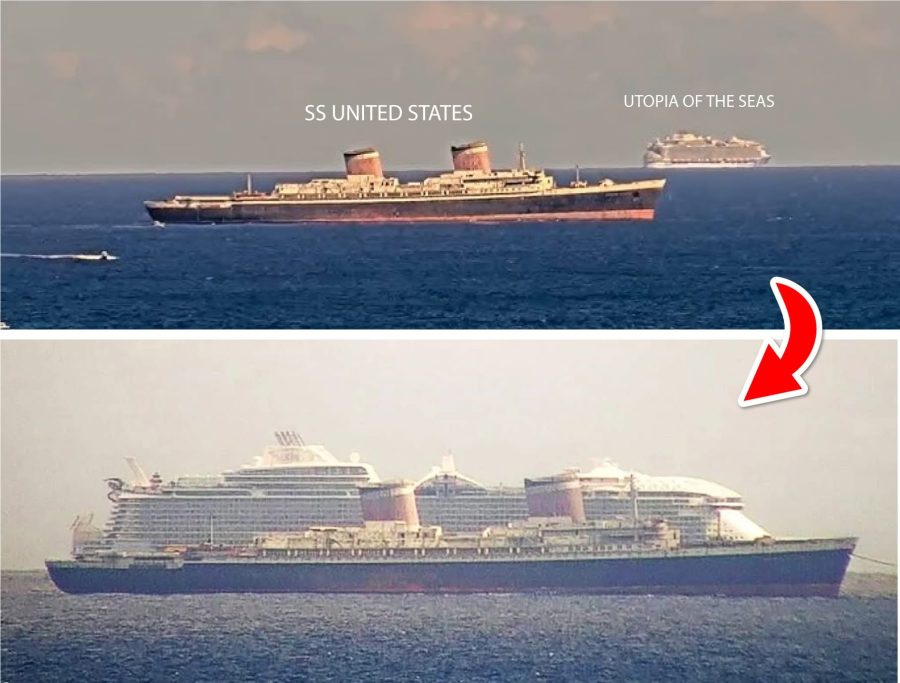
Maritime vessels rely on Automatic Identification Systems (AIS) to maintain safe distances at sea. Crews use this data to calculate the Closest Point of Approach (CPA), typically aiming for a minimum CPA of 2 to 3 miles. Throughout the Gulf, however, the convoy repeatedly encountered vessels closing to within 0.5 or even 0.1 miles. These boats were purposely crowding the channel to catch one final glimpse of the United States afloat. One cruise ship, the Utopia of the Seas, hailed the Vinik No. 6 over the radio. They requested permission to come alongside the United States at a safe distance and ultimately matched her pace for three hours. In addition to the Utopia of the Seas, the United States was escorted into Mobile by an entourage of planes, helicopters, military jets, and drifting man-of-war jellyfish.
Mobile, Alabama: Pinned in by Weather and the Vinik No. 6
Vinik Marine's job was not over when they arrived in Mobile, ahead of both their original plan and the incoming storm. The port was worried about the ship breaking loose in the storm, so the Vinik No. 6 remained in port with the United States pinning her in just in case. They remained in Mobile for three days before bidding farewell to their ward and beginning the return journey to their homeport of New York.
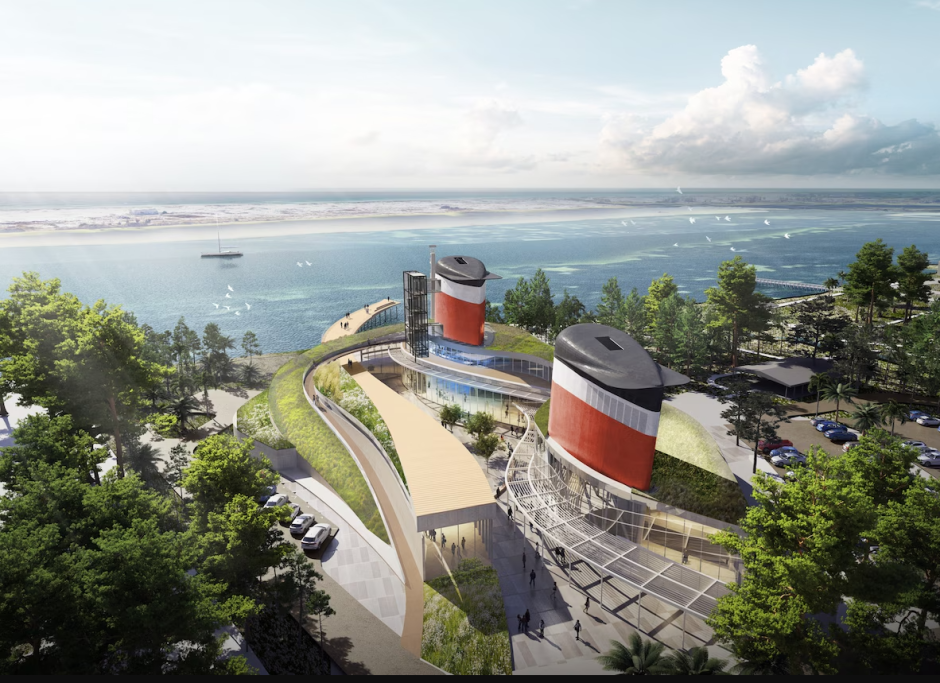
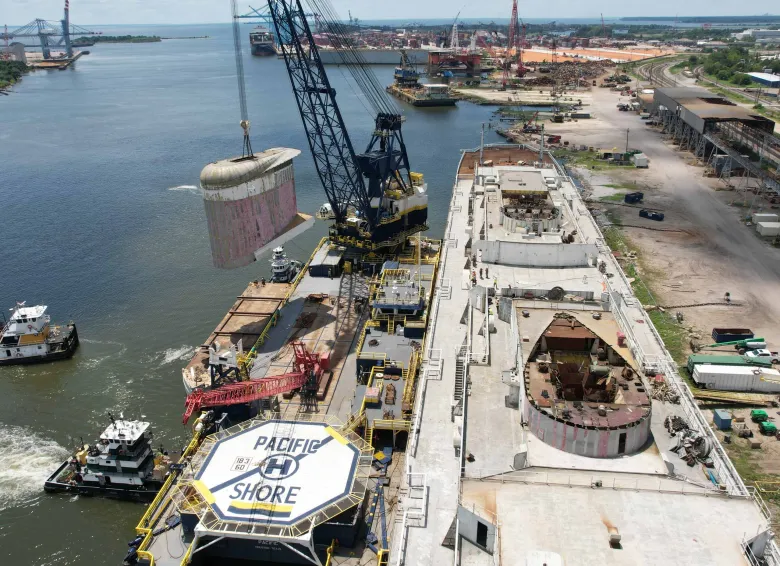
The SS United States remains in Mobile being prepped for her future as a reef. A museum and documentary commemorating her are currently being developed.
We need your consent to load the translations
We use a third-party service to translate the website content that may collect data about your activity. Please review the details in the privacy policy and accept the service to view the translations.